 English
 Deutsch
 Français
 Dansk
 Nederlands
 Italiano
 Español
 Português

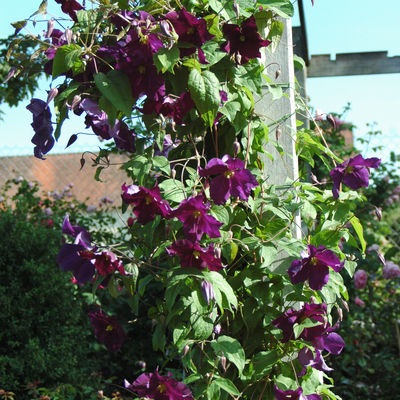
Clematis 'Marcelina'

Clematis 'Marcelina'
Growth height 200 cm
Deep Purple Beauty
- – Large, deep purple flowers from July to September
- – For trellises, lattices and pots – in sun or partial shade
- – Hardy to zone 6 – simple pruning in March
Unfortunately not available at the moment.
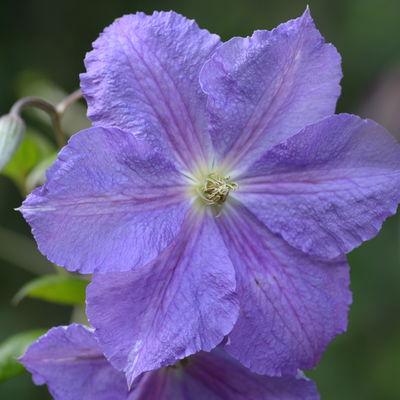
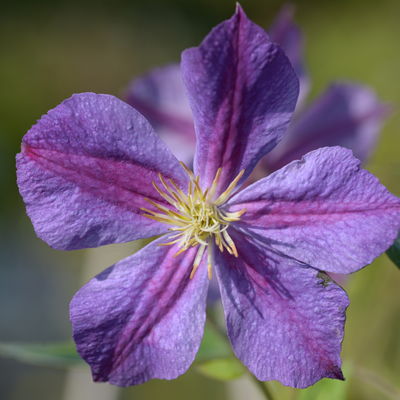
Similar varieties you can order now
Fertiliser included – free shipping within Germany
Add a promotional item – we deliver the entire order with free shipping.
The discount applies per item: every promotional item in the basket reduces the shipping costs by the amount of one parcel.
Handy extras
Fertiliser included – free shipping within Germany
Select size – we deliver the entire order with free shipping. Everything ships together.
Goes well with


- Colour
- dark purple
- Height
- 200 cm
- Flower size
- 12 cm
- Flowering period
- July to September
- Pruning / care
- cut back to 30 cm in March
- Pruning group
- 3
- Hardiness
- Zone 6 -23.3 to -17.8 °C
- Supplied as
- 2 l pot, with sturdy shoots
Clematis 'Marcelina' was raised in 1997 by the Polish friar and breeder Stefan Franczak, named in 1998 and introduced in 2005. The flowers appear in deep purple, measure about 12 cm across and consist of six elliptic, slightly wavy tepals with a fine tip.
'Marcelina' flowers from July to September and reaches about 200 cm in height. This makes it suitable for trellises, lattices and obelisks in smaller to medium-sized gardens, as well as for containers. It thrives in sun or partial shade, in any aspect, and can also be used as a screen or for climbing trees.
'Marcelina' is winter-hardy (zone 6, down to about -17.8 to -23.3 °C). For vigorous growth and abundant flowering, cut it back to about 30 cm in March. The variety is also well suited as a cut flower.
Experiences and pictures from our visitors (0)
✓ this is about the plant, not the parcel service ✓ many years of experience and pictures from many regions ✓ more than 1,000 posts since 2002


Read here what you should bear in mind when planting and how to prepare the planting site.
Everything about pruning groups and how to interpret them for the right pruning.
last viewed:


