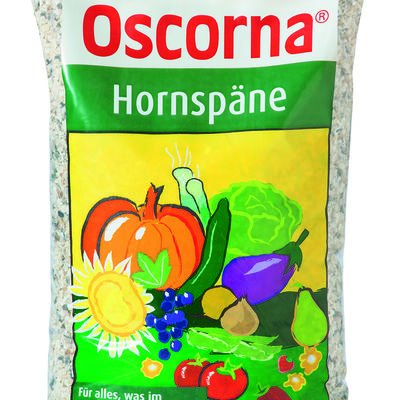
AddPlease select a size first.Added to the basket.Unfortunately that did not work. Please try again.no size selected – not includedalso ordered:click again to deselect
Purchase on invoice · 14-day right of withdrawal
Shipping from 6,90 €
To all 27 EU countries and Switzerland
DHLGLS– you choose the shipping carrier
Fertiliser included – free shipping
within Germany
Select size – we deliver the entire order with free shipping. Everything ships together.
Oscorna Rose Fertiliser
1kg rose fertiliser in a carton – 20 kg sack of rose fertiliser
Organic rose compost, peat-free
15 L bag – 45 L bag
Oscorna BodenAktivator
3 kg carton of soil activator – 25 kg bag of soil activator
Clematis texensis 'Princess Diana' was raised in 1984 by English breeder Barry Fretwell from a cross of 'Bees' Jubilee' with Clematis texensis. Introduced at first as 'The Princess of Wales', it received its present name in 1996 to avoid confusion with an older Jackman cultivar. The tulip- to bell-shaped, waxy flowers measure 7–8 cm and are pink with white; cream stamens sit at their centre.
'Princess Diana' flowers from July to September and, at around 400 cm tall, climbs vigorously on trellises, pergolas, obelisks and wall supports; it can also be grown in a pot. It does best in a sunny, warm position but tolerates dappled shade, and it needs well-drained soil and an airy spot. As a companion to climbing roses and conifers, it adds colour in late summer.
'Princess Diana' is hardy in zone 7 (-17.7 to -12.3 °C). As a pruning group 3 variety it flowers on new wood: cut the plant back to about 25 cm every March to encourage vigorous growth and abundant flowers. The Royal Horticultural Society has awarded the variety its Award of Garden Merit.
Experiences and pictures from our visitors (6)
✓ this is about the plant, not the parcel service ✓ many years of experience and pictures from many regions ✓ more than 1,000 posts since 2002
The bell-shaped flower is wonderful, as is the relatively late and then long-lasting flowering period. The young shoots from the base need protection here from late, wet and cold snow so that they don't rot.
In my garden Princess Diana is growing in its 2nd year and is already 3 metres tall. It flowers profusely and for a long time. I love the flower shape. No clematis wilt or other diseases. Pruned back to 30 cm in winter.
Ich liebe diese Clematis. Habe sie schon viele Jahre.
Ist sehr gesund und blühfreudig. Davon müßte es auch noch andere Farben geben.
“
Anonymer Rosenfreund16.04.2012 09:05
Top-quality goods
The young plant arrived here in superb condition, in line with the high standards of Schmid-Gartenpflanzen.
In the ideal spot in the garden, supplied with a little of my own compost and a nice climbing support, it has grown to an impressive size within a short time. It has already formed many buds and I'm already looking forward to the blooms alongside my New Dawn, which stands nearby, without crowding Princess Diana.
Thank you, Mr. Schmid, for your wide selection of clematis and roses, and for the outstanding quality: Always happy to order again!
My Princess Diana is basically healthy in growth. She does bloom, but disappointingly little. At most there are three flowers at the same time. Nothing of the abundance of blooms in full measure that you would expect from a clematis.
I have her on the balcony in a container, which is really very deep, as required, about 40 cm; the surface is covered with wood chippings to provide shading and at the same time no root competition from underplanting. Since the balcony faces full south, however, I moved her back a little into the covered area of the balcony, which is still quite bright. Should I expose her to full sun? Would that be better? I thought clematis, as a woodland vine, wouldn't particularly appreciate that. I'm at a loss and would be very grateful for a tip!
- namely if you Clematis texensis 'Princess Diana' bought, planted and observed and cared for in the garden over several years some time ago.
Now help other garden lovers with your valuable experience when choosing a variety.
A rose is more than a parcel.A clematis is more than a parcel.Once it is shipped, its story with you begins.We have been working with [[rosen]] since 1896. We know: a good plant needs more than safe shipping.We have been working with [[rosen]] and [[clematis]] since 1896. We know: a good plant needs more than safe shipping.That is why we offer you not only plants, but also the [[wissen]] and experience to plant, prune and care for them properly.Schmid Gartenpflanzen · Rose nursery since 1896Schmid Gartenpflanzen · Rose and clematis nursery since 1896rosesclematisknowledgeknowledgeMore about our nursery
 English
 Deutsch
 Français
 Dansk
 Nederlands
 Italiano
 Español
 Português
 Polski
 Čeština
 Slovenčina
 Slovenščina
 Lietuvių
 Latviešu
 Eesti
 Română