AddPlease select a size first.Added to the basket.Unfortunately that did not work. Please try again.no size selected – not includedalso ordered:click again to deselect
Purchase on invoice · 14-day right of withdrawal
Shipping from 6,90 €
To all 27 EU countries and Switzerland
DHLGLS– you choose the shipping carrier
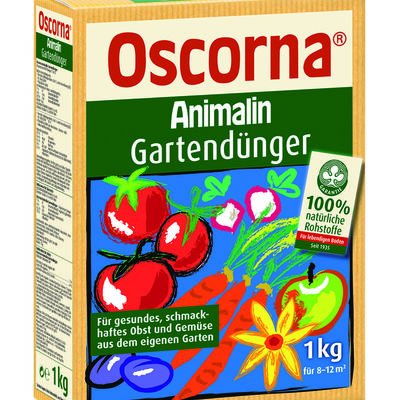
Fertiliser included – free shipping
within Germany
Select size – we deliver the entire order with free shipping. Everything ships together.
Oscorna Rose Fertiliser
1kg rose fertiliser in a carton – 20 kg sack of rose fertiliser
Organic rose compost, peat-free
15 L bag – 45 L bag
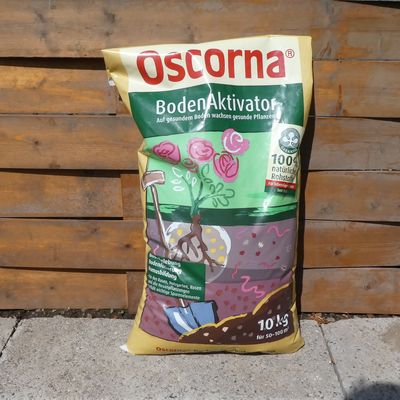
Oscorna BodenAktivator
3 kg carton of soil activator – 25 kg bag of soil activator
Clematis 'Sieboldii' was brought from Japan to Europe in 1836 by the German physician and naturalist Philipp von Siebold, whose name it has carried ever since; its exact parentage has never been fully resolved. The individual flowers show creamy-white, slightly oval tepals surrounding a striking violet centre of numerous staminodes, transformed stamens, which have earned the variety its nickname of Passion Flower Clematis and often remain intact for months. At 8 to 12 centimetres across, 'Sieboldii' ranks among the larger-flowered members of its group and is also the parent of the cross 'Night Veil'.
The flowering period runs from July to October, and with good care the plant blooms twice a year. Reaching a height of around 300 centimetres, 'Sieboldii' is excellent for trellises, pergolas and obelisks against warm walls, as well as for container growing on a terrace or in a conservatory. It prefers a warm, sunny, wind-sheltered position with free-draining, chalky or loamy soil - let the foliage and stems enjoy the warmth while keeping the roots cool and shaded.
'Sieboldii' is only moderately hardy (zone 9, down to about -6.6 to -1.2 °C) and does best in a sheltered spot with winter protection such as mulch or fleece. Prune back to about 50 centimetres in March to encourage vigorous new growth and abundant flowering. Because the plant produces mainly flowering wood rather than growth shoots, it can be somewhat temperamental, so allow it a little time to settle in after planting before it shows its full flowering glory.
Experiences and pictures from our visitors (7)
✓ this is about the plant, not the parcel service ✓ many years of experience and pictures from many regions ✓ more than 1,000 posts since 2002
Contrary to many statements in specialist books, the florida sieboldii has so far proved hardy with me without much protection (only earthed up). It is very free-flowering and a real showpiece in front of our red house wall!
Clematis florida Sieboldii has been in my garden for quite a few years. Often I thought it was dead after winter, as there was nothing left to be seen of it above ground. And then in the course of spring I would happen to see new shoots, which then, depending on how the summer turned out, had developed more or less well. The flowers came in the course of the summer. I have neither fertilised it nor pampered it and never given it winter protection. That is why I assume that if I did, it might not disappear now and then as it has so far. This year I'll spoil it for once! As you can see in the picture below, it grows up together with Warszawska Nike on the rose arch of the vegetable garden. That gives a positive-negative impression, but it wasn't planned, just pure coincidence.
Unfortunately nobody writes in which region the Sieboldii has proved hardy. That may be the case on the Rhine or in the north with the mostly mild winters. Here with us (between Ulm and Memmingen) it didn't survive even the winter 2007/2008, which was mild for us.
That the Sieboldii is hardy was shown by the last winter of 2009/2010. Only earthed up, it survived the 3 months of continuous frost with temperatures down to -20 degrees in the Lüneburg Heath. Above ground there was nothing to be found, the first fresh shoots only came in May and the flowering was less than the year before - but it survived! Unfortunately I cannot say that of some other varieties that are said to be hardier.
Dass die Sieboldii auch härteste Winter überleben kann, hat der letzte Winter (2009/2010) gezeigt. Nur angehäufelt hat sie den 3-monatigen Dauerfrost mit Temperaturen bis -20 Grad in der Lüneburger Heide überlebt. Es hat zwar bis April gedauert, bis die ersten Triebe aus dem Boden kamen und die Blüte viel geringer aus als sonst - aber andere Sorten haben überhaupt nicht überlebt, denen man geringere Empfindlichkeit nachsagt.
Herzliche Grüße aus der Heide
“
suse12.08.2010 22:58
In contrast to the posts above, my first C. Florida Sieboldii didn't even survive a not particularly hard winter (Alpine foothills).
Today, as a container plant that can be brought in late, it is on the other hand very beautiful.
Hello everyone, I live on the Main and all my clematis have survived the winter so far, you should just protect the root, in summer against the heat, in winter against the cold (simply with a bit more soil and a potato sack or bag) :-))
- namely if you Clematis 'Sieboldii' bought, planted and observed and cared for in the garden over several years some time ago.
Now help other garden lovers with your valuable experience when choosing a variety.
A rose is more than a parcel.A clematis is more than a parcel.Once it is shipped, its story with you begins.We have been working with [[rosen]] since 1896. We know: a good plant needs more than safe shipping.We have been working with [[rosen]] and [[clematis]] since 1896. We know: a good plant needs more than safe shipping.That is why we offer you not only plants, but also the [[wissen]] and experience to plant, prune and care for them properly.Schmid Gartenpflanzen · Rose nursery since 1896Schmid Gartenpflanzen · Rose and clematis nursery since 1896rosesclematisknowledgeknowledgeMore about our nursery
 English
 Deutsch
 Français
 Dansk
 Nederlands
 Italiano
 Español
 Português
 Polski
 Čeština
 Slovenčina
 Slovenščina
 Lietuvių
 Latviešu
 Eesti
 Română