 English
 Deutsch
 Français
 Dansk
 Nederlands
 Italiano
 Español
 Português

Clematis 'Eriostemon'


Clematis 'Eriostemon'
Growth height 300 cm
Rare Beauty with History
- – Nodding, blue-violet bell flowers (5–7 cm) from June to August
- – Scrambles through shrubs and perennials – sunny to semi-shaded
- – Very hardy (Zone 5) – historic variety, prune back to 25 cm in March
Unfortunately not available at the moment.
Similar varieties you can order now

Fertiliser included – free shipping within Germany
Add a promotional item – we deliver the entire order with free shipping.
The discount applies per item: every promotional item in the basket reduces the shipping costs by the amount of one parcel.
Handy extras
Fertiliser included – free shipping within Germany
Select size – we deliver the entire order with free shipping. Everything ships together.
Goes well with



- Colour
- blue
- Height
- 300 cm
- Flower size
- 5-7 cm
- Flowering period
- June to August
- Pruning / care
- cut back to 25 cm in March
- Pruning group
- 3
- Hardiness
- Zone 5 -28.8 to -23.4 °C
- Supplied as
- 2 l pot, with sturdy shoots
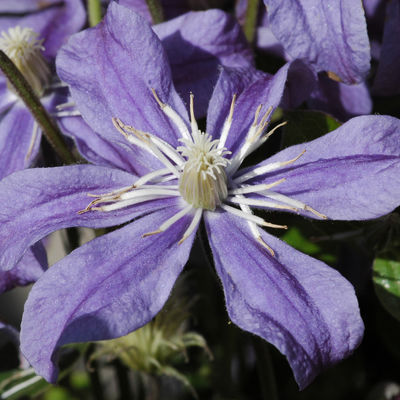
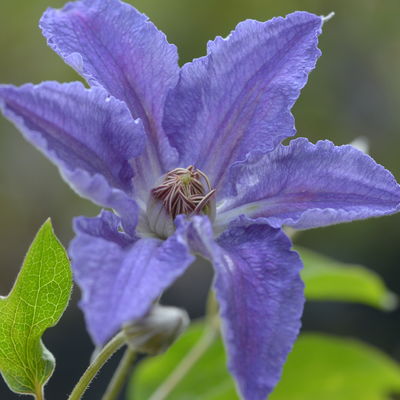
Clematis 'Eriostemon' is one of the earliest crosses between Clematis integrifolia and Clematis viticella, making it a close relative of 'Hendersonii', raised in Great Britain in 1835 — experts at the International Clematis Society see only minor differences between the historic selections from this cross. Its nodding, bell-shaped flowers are 5–7 cm across, glow in rich blue-violet, and are beautifully set off by creamy to yellowish stamens.
From June to August, 'Eriostemon' puts on its floral display, growing up to 300 cm tall. Like its close relatives, it is not a conventional climber but a semi-shrubby clematis that threads loosely through shrubs, roses and perennials or leans against trellises and obelisks. It thrives in both full sun and semi-shade and suits south-, west- and east-facing positions — ideal for naturalistic perennial borders with enough room to spread.
'Eriostemon' is very winter-hardy (Zone 5, down to about -28.8 °C) and reliable even in harsh locations. Cut the plant back to about 25 cm in March so it sprouts vigorously and densely in spring — this corresponds to Pruning Group 3, as also given by the Royal Horticultural Society for this cross. Like many historic clematis, it needs a little time after planting to establish before showing its full flowering potential.
Experiences and pictures from our visitors (0)
✓ this is about the plant, not the parcel service ✓ many years of experience and pictures from many regions ✓ more than 1,000 posts since 2002


Read here what you should bear in mind when planting and how to prepare the planting site.
Everything about pruning groups and how to interpret them for the right pruning.
last viewed:


