 English
 Deutsch
 Français
 Dansk
 Nederlands
 Italiano
 Español
 Português

Clematis 'John Huxtable'


Clematis 'John Huxtable'
Growth height 300 cm
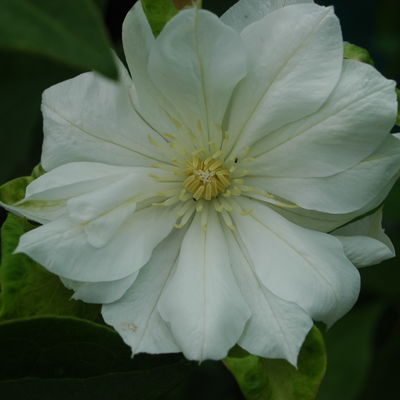
Elegant white late bloomer
- – Large, white bowl-shaped flowers from July to September
- – Compact climber for trellis and obelisk – sun to semi-shade
- – Flowers on new growth – pruning in March is straightforward
Unfortunately not available at the moment.
Similar varieties you can order now
Fertiliser included – free shipping within Germany
Add a promotional item – we deliver the entire order with free shipping.
The discount applies per item: every promotional item in the basket reduces the shipping costs by the amount of one parcel.
Handy extras
Fertiliser included – free shipping within Germany
Select size – we deliver the entire order with free shipping. Everything ships together.
Goes well with
- Colour
- white
- Height
- 300 cm
- Flower size
- 10-12 cm
- Flowering period
- July to September
- Pruning / care
- cut back to 50 cm in March
- Pruning group
- 3
- Hardiness
- Zone 6 -23.3 to -17.8 °C
- Supplied as
- 2 l pot, with sturdy shoots
Clematis 'John Huxtable' arose in the garden of John Huxtable in Devon, who passed the plant to Rowland Jackman in 1967. It is thought to be a seedling or a sport of 'Comtesse de Bouchaud'; Raymond Evison of Guernsey introduced it to the trade. Its pure white, translucent flowers measure 10 to 12 cm and usually have six sepals with fine veining, a slightly wavy edge and a bowl shape curving inwards. Magnus Johnson considers it the best white cultivar in the Jackmanii group.
At around 300 cm, 'John Huxtable' grows compactly and is easily trained on trellises, obelisks and climbing frames. It flowers from July to September, bringing bright white to the late garden season, when purple and pink tones otherwise dominate. Choose a sunny to semi-shaded spot with moist but well-drained soil.
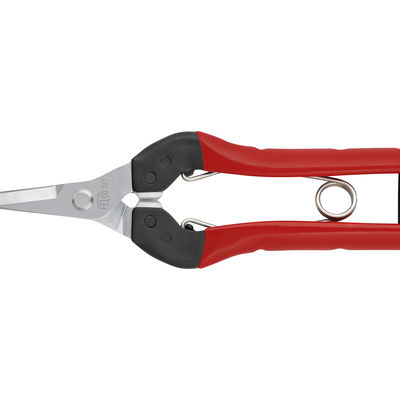
'John Huxtable' is hardy (zone 6, down to about -23 °C). Because the flowers appear on new growth, cut the plant back to about 50 cm in March; this keeps it vigorous at the base and the flowers at eye level. Wear gloves when pruning, as the sap can irritate the skin.
Experiences and pictures from our visitors (0)
✓ this is about the plant, not the parcel service ✓ many years of experience and pictures from many regions ✓ more than 1,000 posts since 2002


Read here what you should bear in mind when planting and how to prepare the planting site.
Everything about pruning groups and how to interpret them for the right pruning.


