AddPlease select a size first.Added to the basket.Unfortunately that did not work. Please try again.no size selected – not includedalso ordered:click again to deselect
Purchase on invoice · 14-day right of withdrawal
Shipping 5,90 € via GLS (bare-root only), otherwise 6,90 €
To all 27 EU countries and Switzerland
DHLGLS– you choose the shipping carrier
Fertiliser included – free shipping
within Germany
Select size – we deliver the entire order with free shipping. Everything ships together.
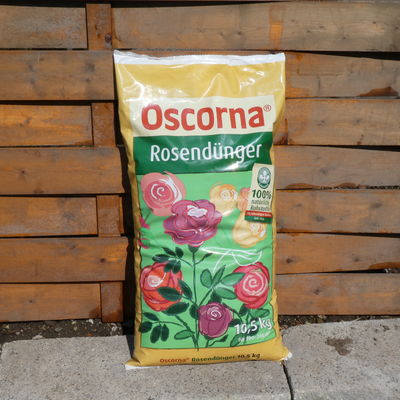
Oscorna Rose Fertiliser
1kg rose fertiliser in a carton – 20 kg sack of rose fertiliser
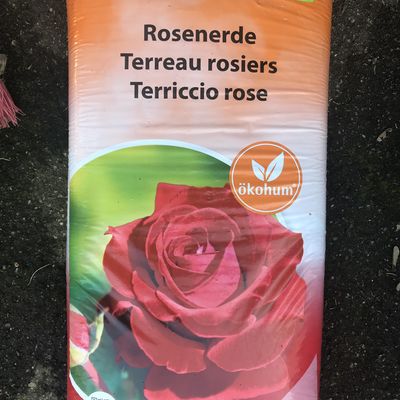
Organic rose compost, peat-free
15 L bag – 45 L bag
Oscorna BodenAktivator
3 kg carton of soil activator – 25 kg bag of soil activator
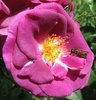
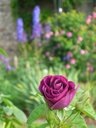
The beautiful, repeat-flowering bedding rose Rhapsody in Blue was chosen Rose of the Year 2003. Its dark violet, semi-double blooms appear all year round in large clusters and have an intense, spicy fragrance. Over time they become somewhat lighter without losing their effect. Particularly beautiful is the contrast between the clearly visible yellow stamens against the dark background.
Rhapsody in Blue grows as a medium-height bedding rose, upright and narrow, making it also well suited for a container. It can also be trained as a small pillar rose up to 250 cm. At a location that should not be too hot, it also tolerates partial shade. Foliage health may need some attention.
This rose is a dream. I planted 3 this spring. They bloomed almost continuously all summer. This rose knows no diseases or pests. At my place it has reached a height of at least 2.2 m. I would plant it again and again.
This rose has stood in partial shade at my place for 4 years and I'm totally thrilled. She is absolutely hardy, easy-care, healthy and blooms and blooms and blooms...
The shoots are long and stand steeply upright, the flowers sit in clusters on the shoot. Simply beautiful and highly recommended!
Unfortunately, unfortunately, unfortunately, is all I can say. My two Rhapsodys looked terrible this year. I decided not to do any preventive treatments this year and they caught the black spots. At the end of the season they still bloomed beautifully, but without leaves. Tip: definitely treat them.
Rhapsody in Blue not growing, losing its leaves or getting yellow leaves? Here you can find out whether it is powdery mildew, black spot or rose rust, and what you can do about these diseases.
- namely if you Rhapsody in Blue ® bought, planted and observed and cared for in the garden over several years some time ago.
Now help other garden lovers with your valuable experience when choosing a variety.
A rose is more than a parcel.A clematis is more than a parcel.Once it is shipped, its story with you begins.We have been working with [[rosen]] since 1896. We know: a good plant needs more than safe shipping.We have been working with [[rosen]] and [[clematis]] since 1896. We know: a good plant needs more than safe shipping.That is why we offer you not only plants, but also the [[wissen]] and experience to plant, prune and care for them properly.Schmid Gartenpflanzen · Rose nursery since 1896Schmid Gartenpflanzen · Rose and clematis nursery since 1896rosesclematisknowledgeknowledgeMore about our nursery
 English
 Deutsch
 Français
 Dansk
 Nederlands
 Italiano
 Español
 Português