AddPlease select a size first.Added to the basket.Unfortunately that did not work. Please try again.no size selected – not includedalso ordered:click again to deselect
Purchase on invoice · 14-day right of withdrawal
Shipping 5,90 € via GLS (bare-root only), otherwise 6,90 €
To all 27 EU countries and Switzerland
DHLGLS– you choose the shipping carrier
Fertiliser included – free shipping
within Germany
Select size – we deliver the entire order with free shipping. Everything ships together.
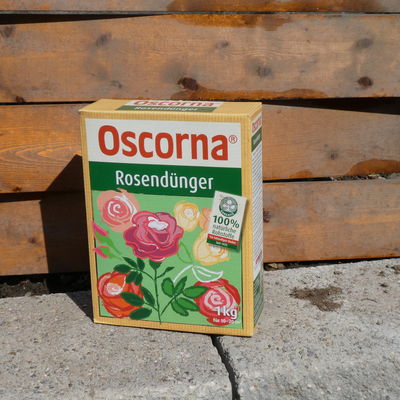
Oscorna Rose Fertiliser
1kg rose fertiliser in a carton – 20 kg sack of rose fertiliser
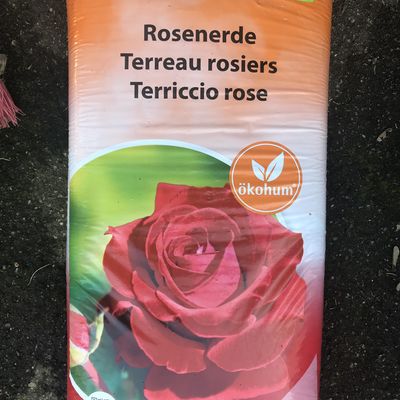
Organic rose compost, peat-free
15 L bag – 45 L bag
Oscorna BodenAktivator
3 kg carton of soil activator – 25 kg bag of soil activator
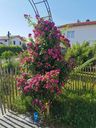
I planted one Perennial Blue on the left and one on the right of the large rose arch. The right one grew very vigorously straight away, the left side was reluctant at first but has caught up completely.
In my garden I have 86 roses, including a red Perennial. While my roses had rust and yellow leaves this year, I didn't even find aphids on my rose arch, which is by now huge. The flowers last a long time and are truly countless. I cut off the spent ones, and so I have a flowering arch again and again right up to autumn.
I had to prune the red one back hard in spring because, stupidly, I had given it a climbing support that was too small and weak. A reinforcing mesh mat bent into a square is not pretty, but ideal; after a while you no longer see it.
This beautiful rose stands at my place on the arch on the south side of the house, completely exposed to the wind in the rough Alpine foothills. It has lovely light-green, pointed foliage and flowers in masses. Its blooms smell wonderfully of lime blossom and attract bees and bumblebees as if by magic, so that the lush beauty hums and buzzes.
It has never been ill, has never frozen back (last winter we had -20° C) and if you don't prune it, it forms pretty little rose hips, which also adorn the rose in winter. The stems are flexible and it has an urge to grow somewhat wider as well, which is why I suspect it could also grow as a lovely shrub.
Actually I have a spot on the terrace for sitting outside, but it is so lovely to sit under this rose that I really only spend time at the rose arch now.
By the way, the combination with the "Donaunymhe" looks especially beautiful: its blooms are shaped very similarly, but are delicate pink and also smell wonderful.
Perennial Blue not growing, losing its leaves or getting yellow leaves? Here you can find out whether it is powdery mildew, black spot or rose rust, and what you can do about these diseases.
- namely if you Perennial Blue bought, planted and observed and cared for in the garden over several years some time ago.
Now help other garden lovers with your valuable experience when choosing a variety.
A rose is more than a parcel.A clematis is more than a parcel.Once it is shipped, its story with you begins.We have been working with [[rosen]] since 1896. We know: a good plant needs more than safe shipping.We have been working with [[rosen]] and [[clematis]] since 1896. We know: a good plant needs more than safe shipping.That is why we offer you not only plants, but also the [[wissen]] and experience to plant, prune and care for them properly.Schmid Gartenpflanzen · Rose nursery since 1896Schmid Gartenpflanzen · Rose and clematis nursery since 1896rosesclematisknowledgeknowledgeMore about our nursery
 English
 Deutsch
 Français
 Dansk
 Nederlands
 Italiano
 Español
 Português
 Polski
 Čeština
 Slovenčina
 Slovenščina
 Lietuvių
 Latviešu
 Eesti
 Română