AddPlease select a size first.Added to the basket.Unfortunately that did not work. Please try again.no size selected – not includedalso ordered:click again to deselect
Purchase on invoice · 14-day right of withdrawal
Shipping 5,90 € via GLS (bare-root only), otherwise 6,90 €
To all 27 EU countries and Switzerland
DHLGLS– you choose the shipping carrier
Fertiliser included – free shipping
within Germany
Select size – we deliver the entire order with free shipping. Everything ships together.
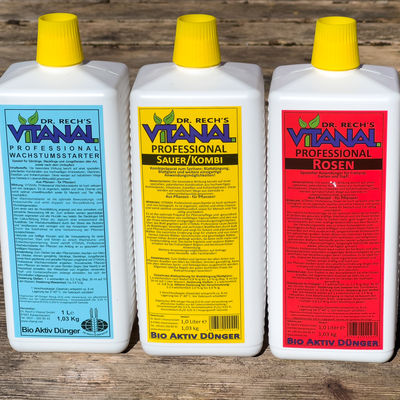
Oscorna Rose Fertiliser
1kg rose fertiliser in a carton – 20 kg sack of rose fertiliser
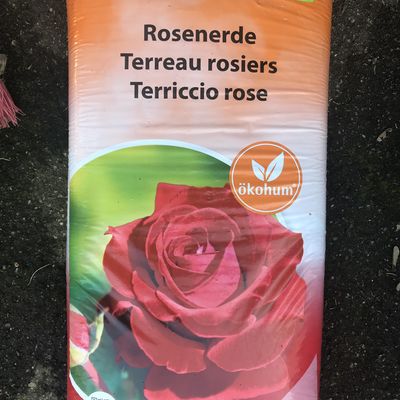
Organic rose compost, peat-free
15 L bag – 45 L bag
Oscorna BodenAktivator
3 kg carton of soil activator – 25 kg bag of soil activator
* complete thornless roses do not exist. Any thorns that may be present are not grounds for a complaint
Pure white hybrid tea rose with a pleasing, compact yet well-branched growth habit and a very good, intense fragrance of honey and tea rose.
The dark-green-leaved plant reliably shows its rich abundance of blooms, singly or in small umbels, into the autumn. It tolerates both heat and rain. In the year 200, Annapurna received an award in Baden-Baden for its outstanding fragrance.
The flower form comes very close to the ideal of a hybrid tea rose from bud to fully opened bloom - if it does not even achieve it.
Experiences and pictures from our visitors (16)
✓ this is about the plant, not the parcel service ✓ many years of experience and pictures from many regions ✓ more than 1,000 posts since 2002
I've had this rose for about four years. It has very beautiful flowers, a dreamlike fragrance, needs support because of its somewhat delicate growth habit, and the flowers don't last especially long, i.e. they shed their petals after a few days.
AUSblush was my first rose, and in the first years I was a little disappointed with its growth, which is probably due to our poor, stony and dry soil. Now it is 7 years old, well established and a strong shrub about 130-150 cm tall. The flower is wonderfully regular and delightfully fragrant, especially in the early stage. Unfortunately it only lasts a few days! Also susceptible to rose rust. Even so, I wouldn't want to be without this beauty of a rose any more!
I have two in the garden. One as a bush form and one as a standard. Strangely, the standard does better; the bush form took two years to settle in, which wasn't the case with the standard, which took off right away, no diseases, a lovely rose. The fragrance is a matter of taste. I prefer the sweet rose scents.
I have a question: This year in April we bought and planted our first shrub - AUSblush in a container. Since it already had buds, we didn't prune it. The first flowers were very big. Now the plant has a great many buds and flowers (unfortunately lasting only 1-2 days) but the flowers are considerably smaller. In addition, the branches are too thin for the many flowers and hang down. What can we do to make the flowers bigger again and the branches stronger? How often do you have to water in the current hot season, and when should we fertilize? Kind regards, Monika Zindel
If a rose has ever won me over with its fragrance, it's AUSblush. With its heavy head, pink and full and round, she wasn't really my type, but once you've held your nose to the flower, you're hooked. It was the same with Hero. When you then see that the somewhat unorthodox growth habit - some shoots run straight along the ground -, the wind resistance of the nodding flower and, again and again, the fragrance nevertheless belong to a healthy plant, you plant another one and another one. With us, three AUSblush are thriving in the bed and one in a container.
eine traumhafte rose! sie blüht ganz enorm und hat einen wunderbaren duft! ich kann sie nur empfehlen!
“
sarah10.07.2004 18:10
AUSblush takes about 2 years to develop into a magnificent shrub. After that, its fragrance, its habit and above all its flower are incomparably beautiful and pleasant. As with most English roses, the flowers nod slightly downwards. On a mature shrub this doesn't bother you so much. I cut my (English and old) roses back by about 1/3 of their length at forsythia blooming time. That way I avoid frost damage and encourage bushy growth.
Some years ago, in early March, I was sent (still by I. Jensen) 3 bare-root plants, which I planted relatively close together. They bloomed for the first time by Easter (as far as I remember it was the end of April), and I was enchanted. Today it is an elegant shrub (the arching branches simply belong), which blooms reliably and ravishingly - the fragrance of the flowers: a poem, their shape perfect, just as you expect from an English rose. I was amazed that this "English lady" didn't have the slightest problem with the local climate (heat and heavy downpours), quite the opposite: she seems made for Ticino. AUSblush is largely immune to the various fungal diseases that regularly attack my French roses. Still, as a precaution after the 1st flush of growth (at about 15 - 20 cm in length) I spray a fungicide developed especially for roses. She wants feeding twice a year (preferably with horse manure in spring and later the usual rose fertilizer).
The only problem, and it isn't the plant's fault: she enjoys enormous popularity with certain kinds of beetles (rose chafers and others), which descend on the flowers and can ruin them within two days (a phenomenon, by the way, that I noticed with all white and very pale roses - in a yellow or darker rose flower I never found one of these beetles). If I manage to remove these unwelcome lodgers in time, the individual flower also lasts quite long. If your white or pale pink flowers seem too short-lived to you, check whether they have "visitors".
Does anyone know a remedy or a way to keep these confounded beetles away?
Ein wunderschöne, pflegeleichte Rose mit einem herrlichen Duft. Habe sie als Hochstämmchen 2004 erworben und neben unserer Gartenbank eingepflanzt. Den Winter hat es bestens überstanden und mich Anfang Juni mit einer üppigen Blüte erfreut. Eine sehr gesunde Rose, die schon zur zweiten Blüte austreibt
“
findus18.06.2005 00:39
Tja, eigentlich wurde ja schon alles gesagt. Robust, gut duftend, leider ein wenig nickende Blüten...nur nicht eines: Sie will viel höher als 1,20 Meter hinauf! Bei mir ist sie jetzt ca 2,30m und steht im Halbschatten. Scheint ihr gut zu bekommen. ;-) Das erste Bild wurde aus meiner Augenhöhe aufgenommen..
“
Anonymer Rosenfreund09.09.2005 20:34
zweifellos eine der schönsten englischen rosen. perfekte blüte, perfekter duft. ein kräftiger rückschnitt im frühjahr hat der dame gut getan: sie blüht und wächst reichlich.
“
grete06.06.2007 23:13
“
schuki25.06.2011 14:41
Wunderschöner Duft und entwickelt sich zum Dauerblüher trotz Halbschatten
“
Schuki23.06.2012 15:11
A fabulous rose that I have just bought again for my new Hungarian home.
The rose actually kept getting bigger with me - at first against a folding screen wall. After the wall was taken down, I built a support frame for the rose, which is now four metres tall. It stands freely in my rose garden and blooms almost all year round, if it isn't too cold.
AUSblush not growing, losing its leaves or getting yellow leaves? Here you can find out whether it is powdery mildew, black spot or rose rust, and what you can do about these diseases.
- namely if you AUSblush bought, planted and observed and cared for in the garden over several years some time ago.
Now help other garden lovers with your valuable experience when choosing a variety.
A rose is more than a parcel.A clematis is more than a parcel.Once it is shipped, its story with you begins.We have been working with [[rosen]] since 1896. We know: a good plant needs more than safe shipping.We have been working with [[rosen]] and [[clematis]] since 1896. We know: a good plant needs more than safe shipping.That is why we offer you not only plants, but also the [[wissen]] and experience to plant, prune and care for them properly.Schmid Gartenpflanzen · Rose nursery since 1896Schmid Gartenpflanzen · Rose and clematis nursery since 1896rosesclematisknowledgeknowledgeMore about our nursery
Schmid Gartenpflanzen | since 1896
Where should we deliver to?
Price and shipping depend on the delivery country.
 English
 Deutsch
 Français
 Dansk
 Nederlands
 Italiano
 Español
 Português